Smart DeLand Yard Cleanup: More Than Just Clearing Brush
Living in DeLand means enjoying beautiful oak canopies, warm weather, and the occasional reminder that nature doesn't always follow our plans. After a storm, or even after a routine season of growth, your yard can start to feel more like a jungle than a garden. That is when a thoughtful DeLand yard cleanup becomes essential. But cleanup here is not just about piling branches and calling it done. It involves understanding the local landscape, knowing which trees are healthy and which are risky, and working within the City of DeLand regulations that protect both your property and the broader community.
I have spent years working with homeowners in this area, and I have seen what happens when yard work is treated as a simple chore. A well-meaning weekend effort with a chain saw can turn a manageable situation into a costly problem. The difference between a smart cleanup and a haphazard one often comes down to a few key decisions: knowing what to cut, what to keep, and how to handle the debris without damaging the rest of your yard.
Start with a Tree Health Evaluation
Before you start dragging branches or firing up equipment, take a close look at what is growing on your property. A proper DeLand yard cleanup begins with a tree health evaluation. This does not require a degree in Florida arboriculture, but it does mean looking for signs of decay, weak branch attachments, or roots that are lifting the soil. An arborist can spot things that most of us miss: a crack in the trunk that runs deep, a fungus growing at the base, or a lean that has gotten worse over the season.
I once worked on a property where the homeowner wanted to clear everything under a large live oak. The tree looked fine from the ground, but a quick climb revealed a hollow section near the main crotch. That tree needed removal, not trimming. A tree risk assessment caught it early. Without that evaluation, a simple cleanup could have turned into a dangerous situation during the next thunderstorm.
Tree Trimming vs. Tree Removal: Knowing the Difference
Not every branch that hangs low needs to come off, and not every tree that looks messy is a danger. Tree trimming is about shaping and maintaining health. It removes deadwood, improves airflow, and keeps branches away from your roof. Tree removal, on the other hand, is for trees that are dead, dying, or structurally compromised. In a yard cleanup, it is common to need both. The trick is knowing which is which.
When I assess a property, I look at the whole picture. A tree that has lost a large limb might recover with proper trimming. A tree that has multiple limbs dying back, or that shows signs of root rot, is probably better removed. Stump grinding and tree stump removal then become part of the cleanup process. Leaving a stump in the ground can lead to termites, trip hazards, and new growth from the roots. Root removal is also worth considering if you plan to replant or install hardscaping in that spot.
Storm Damage Cleanup: When Time Matters
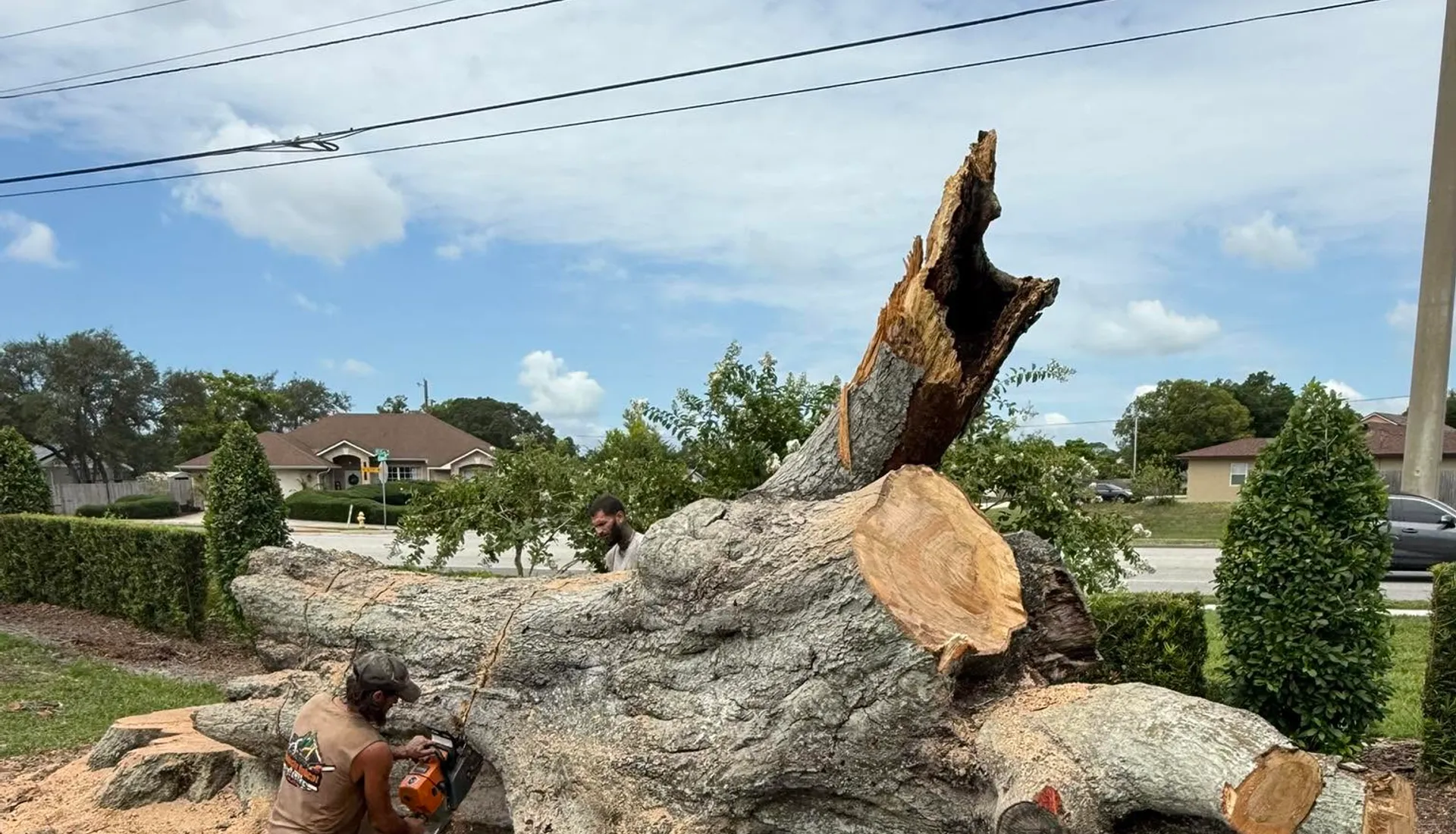
DeLand sees its share of severe weather. After a storm, the priority shifts from routine maintenance to safety. Storm damage cleanup often involves heavy limbs hanging over structures, split trunks that could fall at any moment, and debris scattered across the yard. This is where an emergency tree service becomes invaluable. A crew with the right equipment, including a crane service for large pieces, can stabilize the situation quickly.
I remember a job where a hurricane-force wind had snapped a large pine halfway up. The top half was lodged in a neighboring oak, suspended twenty feet off the ground. That was not a job for a pole saw and a ladder. It required a crane service to lift the broken section out without dropping it on the house below. After the tree work, the cleanup involved debris hauling, mulching the smaller branches, and a full landscape assessment to see what else might be at risk.
Debris Hauling and Lot Clearing: More Than Just Tidy
Once the trees are trimmed or removed, you are left with piles of brush, logs, and leaves. Debris hauling is a straightforward service, but it matters how it is done. Some companies dump everything in a landfill. Better practice is to separate materials: logs for firewood, branches for mulching, and green waste for composting. Mulching is especially useful in DeLand because it helps retain moisture in the sandy soil and suppresses weeds. A good cleanup crew will ask if you want the mulch spread on site or hauled away.
Lot clearing is a bigger step. It involves removing all vegetation from a parcel, down to the ground. This is common for new construction or for properties that have been overgrown for years. If you are clearing a lot, you also need to think about grading and drainage. The City of DeLand regulations require permits for certain types of clearing, especially near wetlands or protected tree species. A professional service will handle that paperwork and make sure the work meets local codes.
Practical Planning for Your Yard Cleanup
Getting the most out of a yard cleanup means thinking ahead. Here are a few things I always recommend to homeowners in DeLand:
- Schedule your cleanup before hurricane season, typically in late spring or early summer. This gives you time to remove weak trees and trim branches before the winds arrive.
- Ask for a tree risk assessment as part of the estimate. It costs little and can prevent expensive emergency work later.
- Decide what you want done with the debris ahead of time. If you want mulch, say so. If you want everything hauled, confirm that in writing.
- Check whether the work requires a permit from the City of DeLand. This is especially true for large tree removal or lot clearing.
- Look at the whole property, not just the trees. Overgrown shrubs, invasive vines, and ground debris all affect the health of your remaining trees.
Emergency Tree Service: What to Do When a Tree Falls
Even with the best preparation, storms can still cause damage. If a tree falls on your house, driveway, or fence, the first step is to make sure everyone is safe. Do not try to move large limbs yourself. Call an emergency tree service that can respond quickly. They will bring the right tools: chain saws, ropes, and possibly a crane service for heavy sections. After the immediate danger is removed, the cleanup continues with stump grinding if the stump is in a bad spot, and debris hauling for everything else.
One thing that surprises many homeowners is how much debris a single large tree produces. A sixty-foot oak can generate several truckloads of wood and brush. That is why a good cleanup plan includes not just cutting, but also hauling and disposal. If you have the space, you might keep some of the wood for firewood or have it chipped into mulch for your garden beds.
Storm Preparedness: The Best Cleanup Is the One You Plan
Storm preparedness is not just about buying batteries and bottled water. It is also about looking at the trees around your home and making decisions before the weather turns. A tree that is half dead, or that has a heavy lean toward your house, is a risk. Removing it during a routine cleanup is far cheaper and safer than dealing with it during a storm. I always tell clients: if you are wondering whether a tree is dangerous, it probably is. Have an arborist take a look.
In DeLand, the combination of sandy soil, high winds, and mature trees creates unique challenges. Roots do not hold as firmly in sand as they do in clay. A tree that looks stable can uproot in a strong storm if the root system is compromised. That is why a landscape assessment should include checking the soil around the base of large trees. If you see exposed roots or soil that is washing away, that is a sign that the tree may need support or removal.
Final Thoughts on Yard Cleanup in DeLand
A proper DeLand yard cleanup is about more than making the yard look neat. It is about safety, long-term tree health, and working with the local environment. Whether you are dealing with storm damage cleanup, routine tree trimming, or a full lot clearing, the process benefits from professional judgment. A chain saw and a pickup truck can move brush, but they cannot replace the knowledge of an arborist or the efficiency of a crew that understands stump grinding, root removal, and debris hauling.
If you own property in DeLand, take the time to look at your trees with a critical eye. Ask questions. Get a tree health evaluation. Plan your cleanup before the next storm arrives. That small investment in planning will save you money, stress, and possibly the tree that makes your yard special.
Corrections
Spot something wrong? Send it to the desk and it gets fixed in the open.